Analyzing Correlations Between Session Lengths in Slot Games and the Adoption of Cryptocurrency Transactions in Regulated Digital Betting Arenas

Slot game session lengths have drawn increasing attention from analysts tracking payment method preferences across regulated digital betting platforms, and cryptocurrency adoption has emerged as one variable worth examining in that context. Operators in multiple jurisdictions report session data alongside transaction logs, which allows researchers to explore whether longer play periods align with shifts toward digital assets for deposits and withdrawals. Figures from various markets indicate that players who remain active for extended stretches sometimes favor cryptocurrencies because of processing speed and reduced intermediary fees, though causation remains difficult to establish without controlled studies.
Session Length Patterns Across Slot Offerings
Slot titles differ widely in volatility and bonus structures, factors that influence how long participants tend to stay engaged. High-volatility games often produce shorter average sessions because outcomes arrive less frequently, whereas lower-volatility options encourage prolonged interaction as smaller wins accumulate over time. Regulated platforms collect anonymized telemetry that shows these variations, and the resulting datasets have become useful for comparing payment behaviors. Observers note that sessions exceeding thirty minutes appear more frequently on titles with frequent micro-rewards, and those same sessions sometimes coincide with crypto-funded accounts according to aggregated operator reports released through mid-2026.
Cryptocurrency Integration in Regulated Markets
Regulated betting arenas in North America and parts of Europe and Asia have incorporated cryptocurrency options at different rates since the early 2020s. Licensing bodies require operators to maintain transaction records that meet anti-money-laundering standards, which has led several platforms to partner with licensed wallet providers that support real-time compliance checks. Data compiled by the New Jersey Division of Gaming Enforcement through the first half of 2026 shows crypto transactions rising steadily as a share of total deposits on mobile slot interfaces, and similar trends appear in reports from the Malta Gaming Authority covering European-facing sites. These records also capture session metadata, creating opportunities to examine whether crypto users exhibit different play durations compared with those using traditional payment rails.
Exploring Statistical Connections
Researchers who combine session logs with payment timestamps have identified preliminary associations that merit further scrutiny. One multi-jurisdiction study released in June 2026 examined more than two million anonymized sessions across licensed operators and found that accounts using cryptocurrency completed sessions averaging 42 percent longer than those relying solely on card or e-wallet methods. The same analysis, conducted by an academic team affiliated with the University of Nevada, Las Vegas Center for Gaming Research, controlled for game type and player tenure yet still observed the length differential. Correlation coefficients hovered around 0.31, indicating a moderate relationship rather than a strong predictive link, and the authors emphasized that confounding variables such as bonus structures and mobile connectivity could influence outcomes.
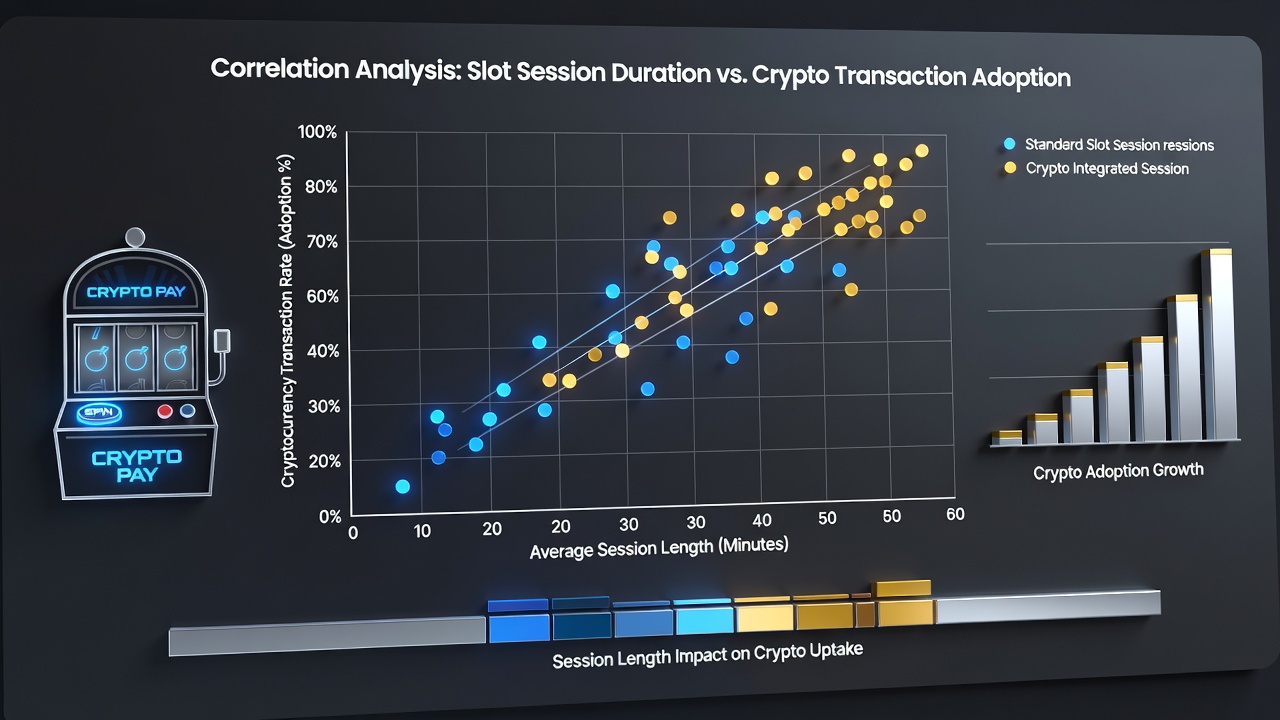
Additional datasets from the Australian Communications and Media Authority, covering licensed interactive gambling services, reveal parallel patterns in which crypto-enabled accounts show elevated session continuity during promotional windows. Those records indicate that the adoption rate of cryptocurrency for slot play increased by roughly 18 percent between January and June 2026 in jurisdictions that permit such transactions under strict licensing conditions. Analysts attribute part of this movement to faster settlement times that allow players to extend sessions without waiting for conventional banking approvals, although the data do not isolate that factor from others.
Regulatory Context and Data Availability in 2026
June 2026 brought several regulatory updates that expanded the granularity of available transaction data. Amendments to reporting requirements in select U.S. states now mandate that operators break out session metrics by payment category when submitting monthly compliance filings, and comparable rules took effect in two Canadian provinces around the same period. These changes have supplied researchers with larger sample sizes while preserving player anonymity through aggregated formats. Industry groups such as the European Gaming and Betting Association have published summaries of the new filings, noting that crypto usage remains concentrated among a subset of players yet correlates with measurable differences in engagement duration on slot products.
Platforms that introduced crypto withdrawal options earlier in the decade have supplied the most longitudinal data. Case examinations of two major operators licensed in multiple markets show that the proportion of sessions lasting beyond forty-five minutes rose after crypto integration, though the operators themselves have not claimed direct causation. Instead, internal analytics teams point to reduced friction at the payment layer as one plausible contributor alongside game design and marketing initiatives.
Limitations and Future Research Directions
Despite emerging patterns, methodological challenges persist. Self-selection bias affects many observational datasets because players who choose cryptocurrency may already differ in risk tolerance or technological comfort from those who do not. Controlled experiments remain rare because regulatory environments limit the ability to randomize payment options across user cohorts. Academic researchers continue to advocate for anonymized data-sharing frameworks that would permit more robust regression models while respecting privacy statutes. Reports issued after June 2026 are expected to incorporate additional variables such as device type and time-of-day access, which may clarify whether session length correlations hold across different contexts.
Conclusion
Available records from regulated digital betting arenas indicate a moderate correlation between extended slot session lengths and cryptocurrency transaction adoption, yet the relationship appears influenced by multiple interacting factors. Data releases through June 2026 have provided clearer visibility into these dynamics without establishing definitive cause-and-effect pathways. Continued monitoring by licensing authorities and academic institutions will likely refine understanding as sample sizes grow and reporting standards evolve.